The Invisible Giant of Global Commerce
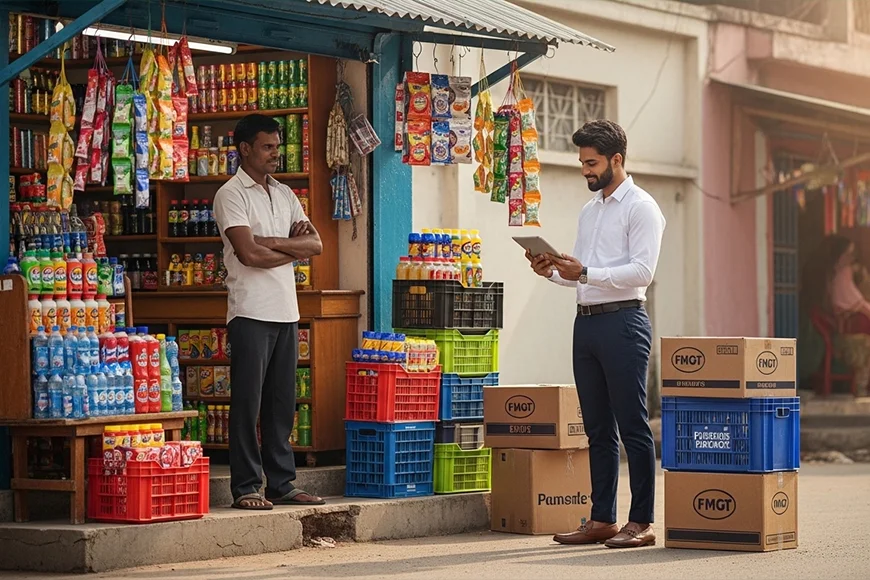
Despite the global fascination with “Modern Trade” (MT), shiny e-commerce apps, and complex omnichannel strategies, the heartbeat of emerging markets isn’t found in a shopping mall or a fulfillment center. It is found in the Kiryanas of Pakistan, the Sari-sari stores of the Philippines, the Dukas of East Africa, and the Spazas of South Africa.
Traditional Trade (TT) remains the primary revenue driver for brands in emerging economies. From Southeast Asia to Africa and the Middle East, these small retailers and informal channels collectively account for 60–70% of total sales for Fast-Moving Consumer Goods (FMCG). In some regions, that number climbs as high as 90%.
Yet, despite its staggering scale, TT is frequently sidelined in digital transformation conversations. This is a strategic oversight. While e-commerce is growing, the sheer density and cultural integration of traditional retail make it an immovable force. For brands, the challenge isn’t moving away from traditional trade—it’s learning how to digitize it.
1. The Scale of Traditional Trade: Numbers Don’t Lie
Traditional trade isn’t “old-fashioned”; it is a hyper-localized, resilient, and highly efficient ecosystem of independent stores and wholesalers. To understand why it dominates, we have to look at the sheer density of these touchpoints:
- India: Over 12 million small retailers form the backbone of the economy.
- Nigeria: Informal retail accounts for over 80% of all consumer purchases.
- Indonesia: Warungs (family-run kiosks) contribute nearly 70% of the country’s retail sales.
In these markets, the “mom-and-pop” store is more than a point of sale; it’s a community hub. These retailers offer something a supermarket cannot: proximity, credit (khata), and extreme broken-bulk purchasing (selling single cigarettes or individual sachets of shampoo). For the billions of consumers living in rural or peri-urban areas, TT is the only viable way to access daily essentials.
The Bottom Line: Growth in emerging markets is mathematically inseparable from traditional trade success. If you aren’t winning at the corner store, you aren’t winning the market.
2. The Paradox: High Volume, High Complexity
If TT is so lucrative, why is it such a headache for FMCG leadership? The very characteristics that make it resilient also make it incredibly difficult to manage at scale. Brands typically face four “Black Box” challenges:
- Fragmentation at Scale: Managing ten supermarket chains is easy; managing 100,000 independent retailers is a logistical nightmare. Each store has unique stocking patterns and erratic ordering behaviors.
- The Data Void: Historically, TT has been a data desert. Sales and inventory data often rely on manual “pen and paper” reporting by distributors or field agents, leading to delayed or inaccurate insights.
- Execution Gaps: Without “eyes on the shelf,” brands struggle with broken promises. Promotions aren’t implemented, pricing is inconsistent, and “Out of Stock” (OOS) rates skyrocket because there is no real-time alert system.
- High Cost-to-Serve: The manual nature of the “van sales” or “order taker” model means sales teams spend more time on administration than on actual selling.
3. Digitizing the “Un-digitized”: How Leaders Win
The most successful brands in emerging markets have realized that you cannot force traditional retailers to act like modern ones. Instead, you must wrap technology around the existing ecosystem.
Smart brands are pivoting toward:
- Mobile-First Sales Force Automation (SFA): Equipping field agents with tools that do more than just take orders. These platforms provide “Suggested Orders” based on historical data and AI, ensuring the right SKU is in the right store.
- Dynamic Route Optimization: Instead of following static paths, sales teams use GPS-enabled data to visit stores that are actually due for a restock, reducing fuel costs and maximizing “strike rates.”
- Image Recognition for Merchandising: Field teams take a photo of the shelf, and AI instantly analyzes “Share of Shelf” and compliance, removing human bias from reporting.
4. Salesflo: Turning Complexity into a Competitive Advantage
At Salesflo, we believe that the complexity of traditional trade is not a barrier—it’s a moat. If you can master the chaos of TT through technology, you build a competitive advantage that is nearly impossible for others to replicate.
Modern sales execution platforms transform the relationship between the brand and the retailer. By providing real-time visibility, brands can finally see through the fog of the distribution layer.
- Transparency: See exactly where your stock is and where it’s getting stuck.
- Productivity: Automate the mundane so your sales reps can focus on building relationships with store owners.
- Agility: If a competitor launches a promotion, you can counter-react across 50,000 stores in 24 hours, not 24 days.
5. Looking Ahead: The Future is “Phygital”
The narrative that e-commerce will eventually “kill” the corner store is a myth. In reality, we are seeing a convergence. Traditional stores are becoming delivery hubs for e-commerce, and digital payment systems are making these micro-retailers more bankable.
The brands that will dominate 2026 and beyond are those that:
- Treat TT as a Strategic Asset: Move away from seeing it as a “legacy” channel and start seeing it as your most valuable data source.
- Invest in Execution Excellence: It’s not about having the best product; it’s about having the best availability.
- Empower the Field: Technology should not be a “policing” tool for sales reps, but a “superpower” that helps them sell more with less effort.
Conclusion
Traditional trade is, and will remain, the backbone of growth. Its reach, customer intimacy, and sheer scale are unmatched. For Salesflo leadership, the mission is clear: we provide the digital nervous system for this massive physical world.
Organizations serious about capturing the next billion consumers must stop waiting for the market to change and start changing how they manage the market.